
INDUSTRIAL ELECTRIC HEATERS
Vacuum Calcination Furnace
Describe the process, material to be heated and vacuum requirements. The image supports an equipment discussion; the final configuration needs confirmation.
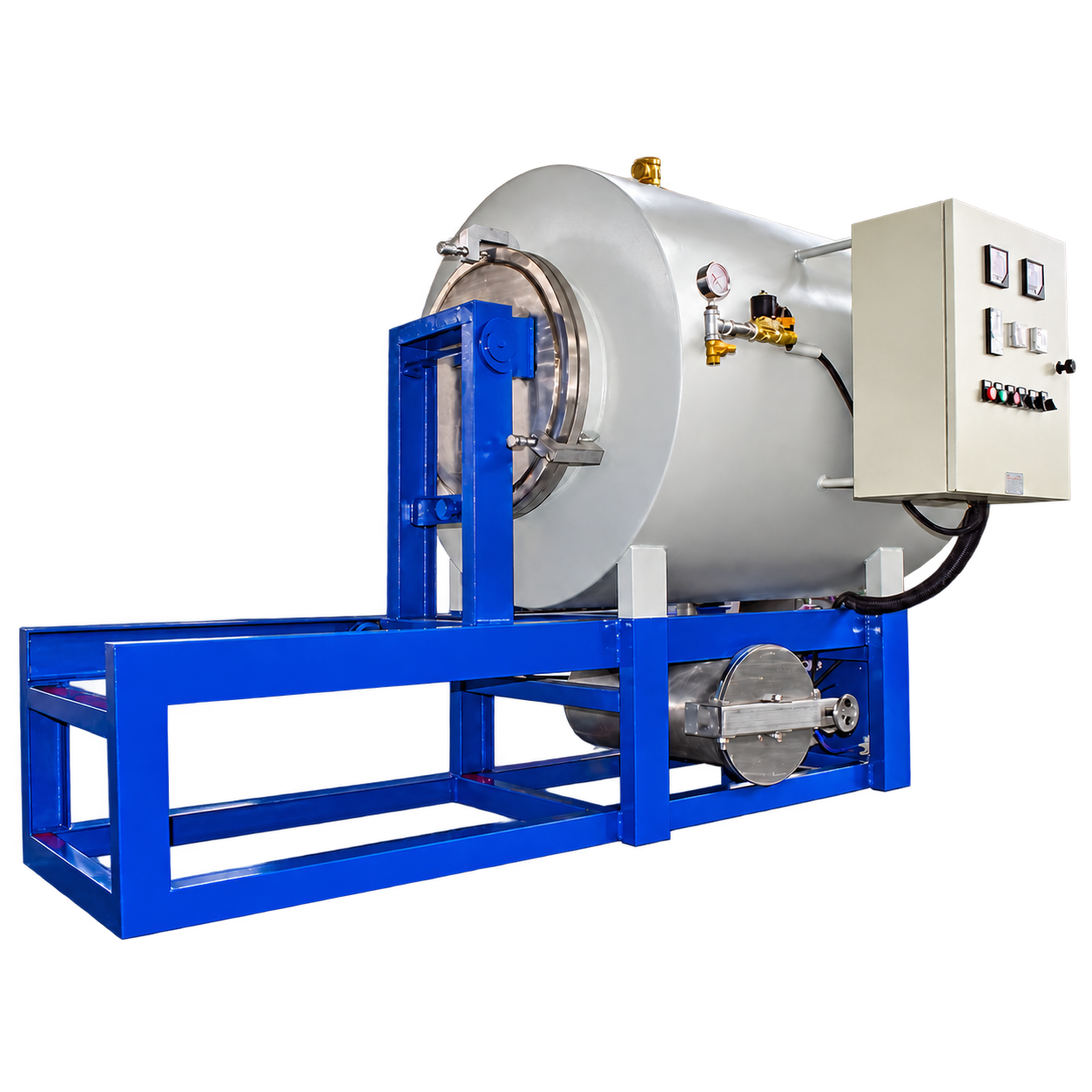
Vacuum Calcination Furnace — Application Review and Selection Process
Start with workpiece properties, target temperature, vacuum and off-gas composition; define process and safety boundaries before the proposal.
Vacuum Calcination Furnace — Applications
Batch thermal processing under controlled vacuum or atmosphere; cleaning, sintering and high-temperature purification require different suitable configurations.
Vacuum Calcination Furnace — Process Conditions and Workpieces
Define workpieces, process window, batch load and emissions before designing vacuum, atmosphere and cooling systems.
- Workpieces: metals, carbides, ceramic green bodies, carbon materials, polymer-contaminated components, inorganic powders and spinning tools.
- Temperature: normal calcination range 500–600°C; confirm target temperature, ramp, hold and uniformity with measurement conditions.
- Vacuum: working/ultimate pressure and permissible leak rate, with units and measurement locations.
- Atmosphere: vacuum, nitrogen/argon protection and gas cooling; nitrogen is not inert to every material at high temperature.
- Emissions: tar, decomposition gases, dust and acidic/corrosive volatiles.
- Batch: load mass, loading arrangement and production cycle.
- Utilities: confirm cooling-water needs, flow, quality and seal cooling by design.
Radiation and contact conduction depend on configuration and conditions. Assess condensate traps for tar; inhibit relevant heating until approved vacuum/atmosphere conditions are met.
Vacuum Calcination Furnace — Technical Specifications and Selection Inputs
Normal calcination temperature is 500–600°C. Provide target temperature, working vacuum, load and emissions; confirm the process profile and acceptance criteria through the agreement and drawings.
Vacuum Calcination Furnace — Material Requirements
Select for temperature, vacuum, corrosion, outgassing and contamination; a material grade alone does not establish system suitability.
- Vessel: Q235B, 304 or 316L are reference options; verify external-pressure strength, cooling and corrosion compatibility. 316L is not universally suited to strongly corrosive decomposition gases.
- Heating elements: select sheath or element materials for normal 500–600°C calcination, element surface temperature, vacuum and emission compatibility.
- Insulation: graphite felt, alumina fibre, mullite or metal radiation shields selected for temperature, vacuum, outgassing and contamination.
- Auxiliaries: racks, flanges, seals and sensor protection matched to temperature, load, vacuum and emissions.
Vacuum Calcination Furnace — Customization Requirements
Assess custom modular designs; confirm configuration and supply scope through agreed technical documents.
- Furnace: usable dimensions, horizontal/pit arrangement, door direction and base.
- Vacuum system: mechanical, Roots or turbomolecular pumps selected for pressure, pumping speed, gas load and contamination, with suitable backing and isolation.
- Controls: zoned sensing, PLC/HMI, recipes, 4–20mA signals and RS485 communication.
- Safety: door, pressure, cooling-loss, independent overtemperature, combustible-gas sensing and alarms as assessed.
- Off-gas: condensation, separation, adsorption/oxidation matched to emissions and safe operation.
- Atmosphere: nitrogen/argon supply, mass-flow control and cooling; assess overpressure and oxygen-deficiency hazards.
- Surface treatment: carbon-steel corrosion protection and suitable stainless-steel polishing.
- Options: rapid gas cooling, load carts, observation windows and data logging, subject to assessment.
Vacuum Calcination Furnace — Frequently Asked Questions
Grouped by selection, commissioning and maintenance for preliminary discussions.
Selection
What information is required?
Provide batch mass, dimensions, temperature, hold time, working vacuum, materials, emissions, supply and discharge requirements; temperature, vacuum and emissions jointly determine design.
What is the normal calcination temperature?
The normal calcination temperature is 500–600°C. Set temperature, heating rate and hold time according to the workpiece and residue properties, following the confirmed process profile.
What risks arise from insufficient vacuum?
It can affect oxidation, process results and decomposition-gas safety. Set approved vacuum/atmosphere permissives and inhibit affected heating stages on faults; do not bypass interlocks.
Installation and Commissioning
What site conditions are required?
Confirm floor capacity, power, designed cooling, exhaust, ventilation and maintenance access; leak-test and validate interlocks before service.
Is water cooling always required?
It depends on vessel, door and seal design; vacuum furnaces do not all use identical cooling. Water-cooled models require flow/temperature and cooling-loss protection with safe fault shutdown.
Maintenance
What routine maintenance is needed?
After safe cooling, isolation and approved venting, clean chamber, racks and condensate collectors. Oil changes apply only to oil-lubricated pumps. Follow the manual for pumps, sensors, cooling, seals and leak checks; shorten intervals for tar-bearing duties.
How is insufficient heating investigated?
First follow safe manual procedures; qualified personnel then check leaks, elements, power, insulation, pumps, load and sensing drift without bypassing protection.
Selection information does not replace a site-specific design. Follow delivered instructions and applicable thermal, vacuum, electrical and environmental requirements.