
Custom Heating Systems
Custom Heating Solutions
Start with the process requirement rather than a fixed product model. A custom heating enquiry brings thermal duty, mechanical interfaces, controls and project constraints into one discussion. Feasibility and supply scope require confirmation.
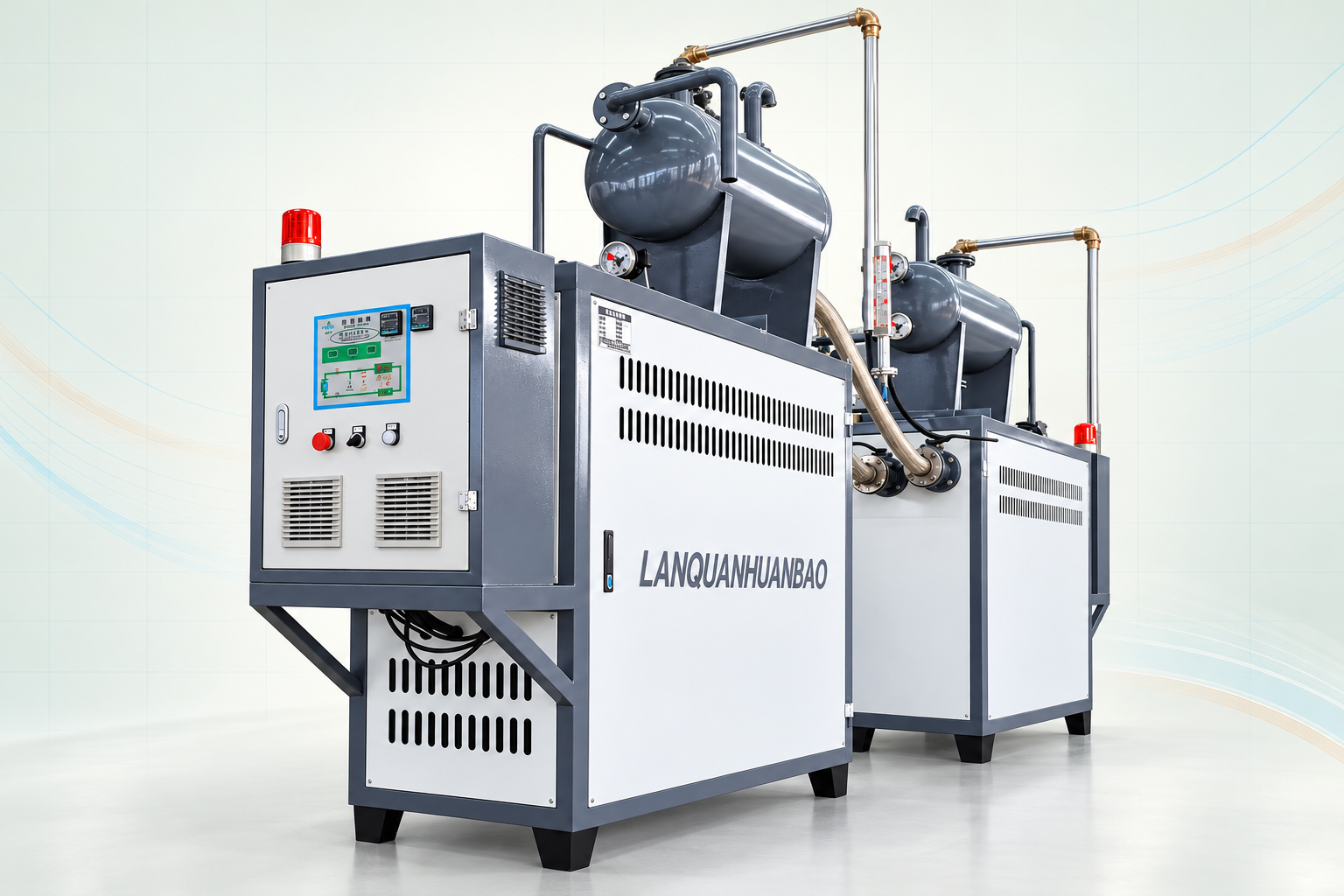
Custom Heating Solutions — Process Flow
Define requirements → design heating/interfaces → configure sensing/controls → validate operation/interlocks.
Custom Heating Solutions — Applications
Assess integrated heating for industrial duties not covered by standard equipment.
Custom Heating Solutions — Heating Media
Design liquid, gas or contact systems for the medium and heat transfer.
- Liquids: water, thermal oil, ethylene glycol and assessed mildly corrosive liquids.
- Gases: air, nitrogen and compatible inert gases; confirm temperature/material compatibility.
- Contact: metal moulds, platens and workpieces.
- Medium inputs: composition, corrosion, flammability, temperature, heat-up time and accuracy.
- System inputs: duty, flow, pressure and immersion/duct/jacket/contact arrangement.
- Site/controls: supply, space, interfaces, local/remote control, logging and coordination.
Thermal oil needs expansion, venting and overtemperature design; gas elements need matched loading/flow, and liquid elements are not assumed suitable without liquid.
Custom Heating Solutions — Technical Specifications
Duty and medium conditions are key; confirm configuration, drawings and interlocks through agreement.
Custom Heating Solutions — Material Selection
Select for temperature, pressure, corrosion and manufacture; allowance does not replace compatibility review.
- Element sheaths: assess 304/321/316L/Incoloy800 for liquid/gas duties, watt density and sheath temperature.
- Pressure parts: Q245R/Q345R or other grades under code/design; assess 20 steel or 304/316L piping for compatibility, without universal 316L corrosion claims.
- Insulation: glass/ceramic fibre and coated-steel/stainless cladding matched to temperature, environment and cleanliness.
- Valves/flanges: carbon/stainless steel matched to medium, pressure, temperature and sealing.
- Cabinets: coated cold-rolled steel or suitable stainless, with ingress, cooling, environment and hazardous-area review.
Custom Heating Solutions — Customization Options
Assess process risks before manufacture against confirmed drawings and agreement.
- Thermal: thermal oil, hot water, duct, jacket or contact designs.
- Construction: dimensions, piping routes, connections and frame.
- Materials: assess element, vessel and piping upgrades for compatibility.
- Controls: HMI, profiles, multipoint sensing, interfaces and protocols.
- Safety: risk-based pressure/flow/level interlocks, relief, detection and explosion protection; necessary safeguards are not optional omissions.
- Auxiliaries: expansion capacity, exchangers, filtration, insulation and skid.
- Functions: automatic venting/make-up, remote operation and exports require process permissives, failure protection and confirmed scope.
Custom Heating Solutions — Frequently Asked Questions
Grouped by selection, commissioning and maintenance.
Selection
What enquiry inputs are needed?
Provide duty, temperature, medium, flow/pressure, supply, space, accuracy, interlocks and communication; clarify unknown inputs in discussion.
How does this differ from standard units?
Custom systems can integrate heating, circulation, exchange, interfaces and coordination, but require feasibility assessment rather than unlimited applicability.
Can an explosion-protected package be supplied?
Assess feasibility/supply for the area classification. Match electrical equipment, instruments, connections, hot surfaces and protection; confirm certification/documents rather than cabinet protection alone.
Installation and Commissioning
What are the installation requirements?
Confirm access, supply, supports and piping loads; clean, vent and dehydrate thermal-oil circuits under approved procedures; validate interlocks before service.
Can it connect to an existing PLC?
Assess 4–20mA analogue signals, RS485 and compatible protocols; agree I/O, ranges, command permissions and fault feedback.
Maintenance
What maintenance is needed?
After safe shutdown/isolation inspect elements, sensors, leakage and filters; service medium by condition/manual, calibrate instruments and verify protection.
How is temperature fluctuation investigated?
Qualified personnel safely review load, flow, sensing, power control, supply and insulation without bypassing interlocks.
Selection information does not replace professional project design. Follow delivered instructions and applicable electrical, pressure-equipment and safety requirements.
Related heating directions
All products ↗START WITH YOUR APPLICATION
A clear requirement.
A better starting point.
You do not need every technical detail to begin. Describe the duty and share what you know.