
Industrial Electric Heaters
Circulation Heaters
Electric circulation heaters, also called inline heaters, add heat to a flowing medium in a contained assembly. Selection begins with the fluid properties, flow conditions and required temperature rise.
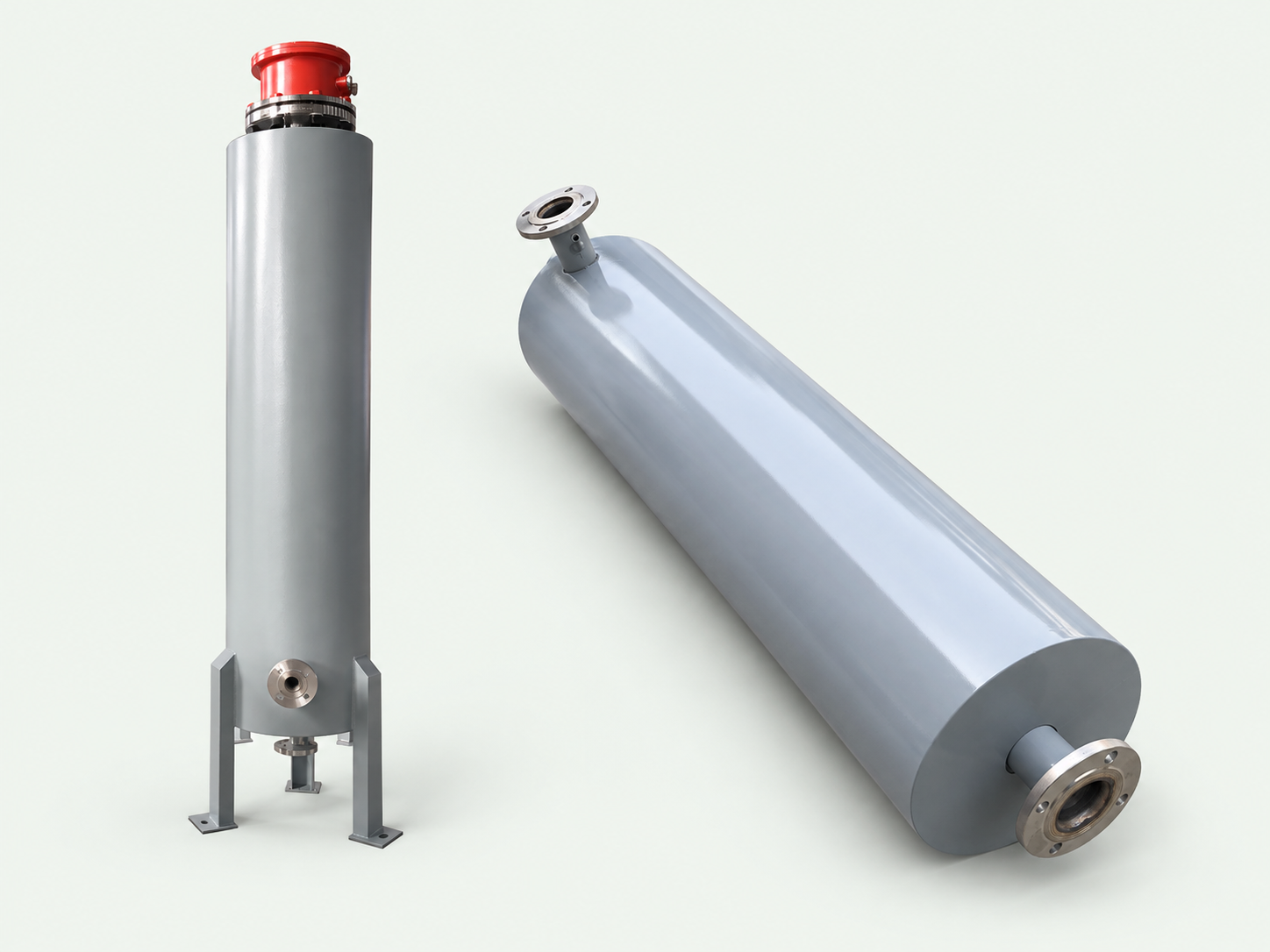
Process flow
Circulation Heater — Process Flow
System components: circulation pump; pipeline heater body (pressure housing, electric heating tube bundle and flow baffles); inlet/outlet valves; vent valve; pressure gauge; flow switch; temperature sensors; expansion tank (thermal oil/high-temperature media); control panel (PID with SSR solid-state relays or SCR power control and safety interlocks); and heat-consuming equipment. Media include water, thermal oil, ethylene glycol and gases.
Show moreShow less
1. Preparation before startup
- Pressure-test the piping and heater body for leaks; inspect flanges and welds.
- Fill the system with the medium. Open high-point vent valves to remove air, then close them after venting.
- Check valve positions: inlet/outlet valves fully open; bypass and drain valves closed.
- Check instruments: inlet/outlet temperature, pressure, flow switch and heating tube surface temperature measurement.
- Check insulation, phase sequence and grounding. Confirm that flow and overtemperature interlocks operate correctly.
- Set the target temperature and confirm protection settings for medium and heating element surface temperatures.
2. Startup sequence
Interlock logic: start the pump before heating. Heating must not be energized without flow, to prevent dry firing.
- Start the circulation pump to establish flow in the closed piping loop.
- Observe the pressure gauge and flow switch. Confirm stable flow and feedback to the control panel.
- When the flow condition is satisfied, the system permits heating output.
- The electric elements convert electrical energy into heat. The medium enters the housing, flows across the tube bundle under the action of the baffles, gains heat by forced convection and leaves the heater outlet.
- The heated medium is delivered to heat-consuming equipment, such as jackets, heat exchangers or reactors, where it releases heat.
- The cooled medium returns through the return line to the pump inlet and is sent through the heater again, forming a continuous closed loop.
- PID control adjusts heating power using the outlet medium temperature, reducing power as the setpoint approaches to maintain temperature.
- The expansion tank accommodates the increase in medium volume during heating and helps stabilize system pressure.
3. Monitoring during normal operation
- Monitor inlet/outlet temperatures, housing pressure, medium flow and heating element surface temperature.
- Automatically adjust heating power when the load or inlet temperature changes.
- Safety interlocks:
- Low flow or loss of flow: immediately disconnect heating power while the pump continues running.
- Medium or heating tube wall overtemperature: disconnect power and activate audible/visual alarms.
- Overpressure: the safety valve opens to relieve pressure.
- Vent and drain periodically to prevent air locks, scale and carbon deposits in thermal oil systems.
4. Shutdown sequence
Normal shutdown
- Disconnect heating power at the control panel. Keep the circulation pump running to remove residual heat from the tube bundle.
- Wait until the heater body and medium cool to a safe temperature.
- Stop the circulation pump.
- Close inlet/outlet valves. For extended shutdown, the medium may be drained through the drain valve.
Emergency shutdown following a fault
Leakage, overtemperature, overpressure or pump failure triggers the interlock to disconnect heating power. Keep the pump running for cooling where conditions permit, issue an alarm and investigate the fault. Heating must not restart until the fault has been cleared.
5. Simplified flow diagram
Medium storage tank → Circulation pump → Inlet valve → Pipeline heater (tube bundle heating) → Hot medium outlet → Heat exchange at process equipment → Cooled return flow → Pump inlet (closed loop)
Monitoring points: heater outlet temperature, inlet pressure, flow switch and heating element surface temperature.
Protection: flow interlock, overtemperature protection, pressure relief and venting.
6. Open-loop pipeline heating (single pass, no return)
The medium enters the heater from upstream piping and is delivered directly to the downstream process after heating. It does not return through a circulation pump loop. This arrangement is generally used for continuous fluid heating.
Applications
Circulation Heater — Applications
Key features: repeated heating of a circulating medium, stable temperature control, pressure operation and suitability for constant-temperature processes. Common media include thermal oil, water, aqueous ethylene glycol and compressed air.
Show moreShow less
1. Chemical processing (a major application, often using thermal oil)
- Constant-temperature heating of reactor jackets/coils for resins, adhesives, coatings, emulsions and synthetic materials.
- Heat sources for rectification columns, evaporators and distillation equipment.
- Circulating heat tracing and temperature maintenance for storage tanks containing viscous materials such as bitumen, paraffin and oils, to prevent solidification.
- Heat tracing for long material-transfer pipelines.
- Plastics and rubber production: extruder barrel preheating, vulcanization vessels and mold temperature controller heat sources.
2. Plastics and rubber
- Water circulation heat sources for injection/extrusion mold temperature controllers.
- Heating for rubber vulcanization, calendering and hot pressing.
- Constant-temperature heating of spinning boxes and melt piping in chemical fiber production.
3. Food and pharmaceuticals (hot water/glycol circulation, clean systems)
- Constant-temperature heating of mixing, fermentation and sterilization tanks.
- Temperature control for edible oil refining, confectionery cooking and dairy processing.
- Active pharmaceutical ingredient reactions and extraction/concentration equipment.
Typical features: stainless steel construction, avoidance of oil contamination and circulation of clean media.
4. New energy
- Lithium batteries: electrode drying heat sources, electrolyte reactor heating and high/low-temperature battery pack testing with water/oil circulation.
- Photovoltaics: constant-temperature wafer cleaning baths and film production heating.
- Hydrogen: medium preheating and pipeline heat tracing.
5. Bitumen and road construction
- Circulating heating and temperature maintenance for bitumen storage tanks and transfer systems.
- Heat sources for asphalt mixing plants.
6. Electroplating and surface treatment (water circulation)
Constant-temperature heating of plating, pickling and cleaning baths. Closed-loop circulation heats the bath fluid and stabilizes its temperature to support coating quality.
7. HVAC, testing and environmental simulation
- Heat sources for high/low-temperature test chambers and constant-temperature/humidity laboratories.
- Auxiliary heating for central air-conditioning water systems.
- Thermal shock test rigs for piping, valves and pressure vessels.
8. Oilfields and energy
- Circulating heat tracing to reduce viscosity in crude/heavy oil pipelines.
- Freeze protection for wellheads and sampling lines.
- Supplementary medium heating for geothermal and waste-heat systems.
9. Timber and building materials
- Circulating heating for timber drying kilns.
- Roller heating in gypsum board and insulation board production lines.
Quick selection reference
- Below 95°C: water circulation heaters for plating, food processing and mold temperature control.
- 100–300°C: thermal oil circulation heaters for chemical reactors, bitumen, plastics and rubber.
- Freeze protection at around -20°C: aqueous ethylene glycol circulation heaters.
Heating medium
Circulation Heater — Heating Media
Classified by operating temperature, with applications, advantages and limitations to support preliminary selection.
Show moreShow less
1. Water (clean/softened water)
Temperature: ambient–95°C at atmospheric pressure; up to 180°C under pressure.
- Advantages: low cost, clean and non-toxic, good heat transfer, readily available and straightforward maintenance.
- Limitations: high-temperature operation requires pressure; scale formation; must remain below the saturation temperature; freezes at low temperatures.
- Applications: plating baths, mold temperature controllers, food/pharmaceutical reaction tanks, HVAC temperature control and cleaning baths.
2. Aqueous ethylene glycol (antifreeze)
Temperature: -40–95°C.
- Advantages: freeze protection; avoids freezing in low-temperature environments; corrosion can be managed.
- Limitations: slightly poorer heat transfer than pure water; some corrosion potential; oxidation/degradation at high temperatures.
- Applications: outdoor equipment in winter, high/low-temperature battery testing, cold-climate pipe heat tracing and environmental test equipment.
3. Thermal oil (organic heat transfer fluid, a common high-temperature medium)
Temperature: 120–320°C, commonly 250–300°C.
Mineral-based and synthetic thermal oils are available.
- Advantages: high temperature at low pressure; high temperatures at atmospheric pressure; stable temperature control.
- Limitations: high-temperature oxidation can cause carbon deposits and aging; fire risk; periodic testing and replacement are required.
- Applications: chemical reactors, bitumen temperature maintenance, rubber vulcanization, resin synthesis and timber drying.
4. Aqueous propylene glycol
Temperature: -30–90°C.
- Advantages: low toxicity, freeze protection and potential use in food/pharmaceutical systems.
- Limitations: higher cost than ethylene glycol and higher viscosity.
- Applications: clean food/pharmaceutical systems and duties where ethylene glycol cannot be used.
5. Compressed air / nitrogen (gaseous media)
Temperature: ambient–450°C or higher.
- Advantages: no liquid leakage risk; no liquid expansion tank required.
- Limitations: poor heat transfer, large flow requirements and high energy demand.
- Applications: purge gas preheating, drying pipelines and heated inert gas protection.
6. Silicone oil (special high-temperature medium)
Temperature: up to 350°C.
- Advantages: good thermal stability and improved oxidation resistance compared with conventional thermal oil.
- Limitations: high cost.
- Applications: advanced testing, specialist material processes and extended high-temperature duties.
7. Molten salt (rare in ordinary circulation pipeline electric heaters)
Temperature: 200–550°C.
- Characteristics: high-temperature heat transfer, strong corrosion potential, solidification at low temperatures and complex systems.
- Applications: specialized projects such as concentrated solar power; uncommon in general industrial duties.
8. Other less common media
- Hydraulic oil: equipment oil-circuit heat tracing rather than a primary heating medium.
- Aqueous glycerol: low-temperature food-process temperature control; high viscosity and limited use.
Quick selection summary
- Below 95°C, clean service: softened water.
- Freeze protection: aqueous ethylene glycol/propylene glycol.
- 120–300°C, high temperature at low pressure: mineral/synthetic thermal oil.
- Gas processes: air and nitrogen.
- Above 300°C, specialist constant-temperature service: silicone oil.
Technical specifications
Circulation Heater — Technical Specifications
Core parameters, selection steps, safety considerations, a customer input checklist and hazardous-area requirements. The ranges below are for preliminary discussion. Final supply specifications, control accuracy and operating limits are subject to the approved design and technical agreement.
Show moreShow less
1. Core technical parameters
1.1 Rated power
- Reference power range: 6–2000 kW; parallel units may be evaluated for larger duties.
- Control: PID temperature control, SCR power control or grouped contactor switching.
- Supply: 380 V three-phase AC; 220 V single-phase may be available for smaller ratings. Custom 6 kV/10 kV supply is uncommon and requires specialist assessment.
1.2 Medium parameters
Common media: softened water, ethylene glycol, propylene glycol, thermal oil, silicone oil, compressed air and nitrogen.
- Reference operating temperatures:
- Water: ≤95°C at atmospheric pressure; pressurized hot water may be evaluated up to 180°C, with suitable operating pressure and margin against boiling.
- Thermal oil: 120–300°C; some synthetic fluids allow 320°C, subject to the fluid manufacturer's limits.
- Ethylene glycol: -40–95°C, depending on concentration and product requirements.
- Gases: up to 450°C may be evaluated, subject to materials, flow and tube wall temperature.
- Reference design pressures: 0.6 / 1.0 / 1.6 MPa; custom 2.5 MPa service may be evaluated.
- Medium flow: calculated from heat duty and inlet/outlet temperature difference.
Formula: Q = P × 3600 / (c × ρ × Δt)
Q: volumetric flow (m³/h); P: heat transferred to the medium (kW); c: specific heat [kJ/(kg·°C)]; ρ: density at operating temperature (kg/m³); Δt: inlet/outlet temperature difference (°C; a common reference is 5–20°C).
This equation applies to steady-state sensible heating. Gas flow must specify actual or standard conditions; phase changes require a separate calculation.
1.3 Heater body construction
- Housing materials:
- Q235-B carbon steel: suitable thermal oil and ordinary water duties, subject to pressure design, temperature and corrosion allowance.
- 304 stainless steel: hot water, food/pharmaceutical duties and glycol solutions, subject to corrosion review.
- 316L stainless steel: some corrosive media and clean pharmaceutical duties; not a universal strong-acid-resistant material.
- Heating elements:
- 304, 316L, Incoloy800 or other materials. High-temperature selection depends on compatibility, surface watt density and tube wall temperature. High-temperature resistance does not permit dry firing.
- Tube bundles may include baffles to guide flow over the tubes and reduce localized overheating.
- Connections: flanges, commonly referenced at DN25–DN200; threaded/welded connections may also be evaluated.
- Insulation: aluminosilicate wool with coated steel/aluminum cladding to reduce heat loss.
1.4 Control system
- Control mode: PID constant-temperature control.
- Temperature sensors: PT100 resistance sensors for suitable medium temperatures. Tube surface/high-temperature measurements require sensors matched to the range and installation.
- Safety functions, configured and confirmed by design:
- Flow interlock: disconnect heating at low/no flow to prevent dry firing.
- Medium overtemperature: first-stage alarm and second-stage trip.
- Heating tube surface overtemperature protection.
- Overpressure: pressure interlocks and relief devices such as safety valves.
- Overload, earth leakage and phase-loss protection.
- Optional communications: RS485/Modbus for PLC or supervisory system integration.
2. Selection steps
Step 1: Define medium and target temperature
- Below 95°C, clean constant-temperature service: softened water.
- Freeze protection: aqueous ethylene glycol/propylene glycol.
- 120–300°C, low-pressure/high-temperature duty: mineral/synthetic thermal oil.
- Gas preheating: air/nitrogen.
Step 2: Calculate heating power
Total heat duty = material warm-up duty + piping/equipment heat losses. A 10–20% margin may be evaluated. Closed-loop steady-state temperature maintenance mainly compensates for losses; intermittent warm-up also requires material mass, specific heat and the required heating time.
Step 3: Define allowable inlet/outlet temperature difference
Common references:
- Water: Δt = 5–10°C.
- Thermal oil: Δt = 10–20°C.
For the same duty, a smaller temperature difference requires greater flow and matching pumps/piping. Control accuracy also depends on sensing, control method, thermal inertia and load changes.
Step 4: Define design pressure and materials
- Ordinary thermal oil: carbon steel housing and Incoloy800 tubes may be evaluated.
- Food/pharmaceutical or corrosive aqueous service: 304/316L or other materials, subject to compatibility review.
Step 5: Select auxiliary equipment for a complete system
- Circulation pump: calculated flow and system resistance.
- Expansion tank: closed thermal oil/hot water systems require expansion capacity and pressure management suited to the design.
- Valves: stop, ball, drain and vent valves.
- Instruments: pressure gauges, temperature indicators and flow switches.
- Safety valve: overpressure relief for the housing.
Step 6: Select controls
- Simple duties: grouped contactor switching.
- Precise temperature control: SCR power control with PID. If ±1°C is required, define the measuring point and operating conditions and verify performance.
- Supervisory monitoring: add Modbus communications.
3. Selection considerations
- Dry firing is prohibited. Liquid circulation heaters require flow interlocks and pump-before-heat logic. Gas heaters require appropriate pressure/flow and overtemperature protection.
- Thermal oil: insufficient velocity may cause tube-wall deposits and element damage. Minimum velocity depends on flow passage, viscosity and surface heat load; ≥2.0 m/s is not a universal requirement for every construction.
- Corrosive media: assess compatibility of both tube and housing materials; a 304/316L grade name alone is insufficient.
- Provide suitable insulation for high-temperature duties to reduce heat loss and burn risks.
- A 10–20% power margin may be evaluated for cold ambient conditions and load changes; also confirm electrical capacity and controls.
4. Customer selection checklist
Copy and complete:
- Heating medium: ________
- Inlet temperature: ____°C; target outlet temperature: ____°C
- Medium flow: ____m³/h
- System design pressure: ____MPa
- Required heating power: ____kW
- Housing material: □Q235 □304 □316L
- Heating tube material: □304 □316L □Incoloy800
- Required control accuracy: ____°C
- Supervisory communications required: □Yes □No
- Location: indoors/outdoors; any hazardous-area requirements
5. Hazardous-area requirements
For installation in an explosive atmosphere, provide area classification, gas/dust group, temperature class and applicable certification requirements. The heater terminal enclosure, field instruments, electrical connections and control equipment located in the classified area must meet the relevant requirements. Exposed housing, flange and piping temperatures also require assessment.
An explosion-protected control cabinet alone does not establish compliance of the complete heating system. Equipment configuration and marking depend on the actual hazardous area; “Ex d IIB T4” is not assumed suitable for all locations.
Materials
Circulation Heater — Material Selection
Selection covers the housing, heating elements, flanges/connections, seals and insulation, matched to medium, temperature, corrosion, pressure and hazardous-area requirements. The component guidance below includes applications and limitations. Grades, pressure/temperature limits and supply requirements must be confirmed by design before use in a proposal or tender.
Show moreShow less
1. Heating tubes (core heating elements)
Heating tubes are a priority in material selection, and the medium strongly affects the choice. Medium temperature differs from tube surface temperature; sheath selection cannot rely on medium temperature alone.
- 304 stainless steel
- Reference duties: softened water, aqueous ethylene glycol, clean water and confirmed compatible mildly corrosive media. A ≤400°C reference must distinguish medium and sheath temperatures and be checked against the element design.
- Advantage: cost-effective.
- Considerations: chloride-containing water may cause pitting. High-temperature oil requires assessment of surface load, velocity and fluid coking risk; changing material alone does not prevent carbon deposits.
- 316L stainless steel
- Reference duties: propylene glycol, food/pharmaceutical media and some mildly corrosive solutions. Temperature and chloride concentration must be evaluated together; ≤400°C is not a universal limit.
- Advantages: improved pitting resistance compared with 304; polishing can meet specified cleanliness requirements.
- Considerations: higher cost than 304; not resistant to every chloride-containing or acidic medium, and does not eliminate thermal oil coking.
- Incoloy 800 (iron-nickel-chromium alloy for evaluation in high-temperature elements)
- Reference duties: mineral/synthetic thermal oil or silicone oil at medium temperatures of 180–300°C, subject to element design confirmation.
- Advantages: high-temperature performance; specific creep requirements depend on grade, condition and design.
- Considerations: higher cost; not a mandatory standard for all thermal oil projects. High-temperature resistance does not allow dry firing. Flow and overtemperature protection remain necessary.
- Incoloy 825
- Reference duties: certain chloride-containing/corrosive specialist media, subject to composition, concentration, temperature and compatibility review.
- Considerations: higher cost; evaluate according to actual needs.
Insulation fill: magnesium oxide powder. End seals may use suitable silicone rubber/glass or other sealing designs, selected for terminal temperature, humidity and insulation requirements rather than medium temperature alone.
2. Heater vessel (housing)
- Q235-B carbon steel
- Reference duties: thermal oil, ordinary hot water and media without significant corrosion, subject to material and pressure design approval.
- Advantages: relatively low cost and good weldability.
- Considerations: pressure suitability depends on design code, wall thickness, temperature, welding and inspection. Internal rust/oil removal may be specified. Long-term aqueous service can cause rust; not a direct choice for clean or corrosive media.
- 304 stainless steel
- Reference duties: softened water, glycol, food/pharmaceutical and clean-water circulation. ≤180°C is a proposal reference requiring pressure and medium review.
- Optional finish: pickling/passivation; mirror polishing may be evaluated for cleanliness requirements.
- 316L stainless steel
- Reference duties: pharmaceuticals, food and some mildly acidic/alkaline media. Chloride service requires assessment of concentration, temperature and stress.
- Features: low carbon helps reduce weld sensitization risk. Cleanliness also depends on fabrication and surface treatment.
3. Connections and flanges
- Carbon steel housing → suitable carbon steel flanges, such as grade 20 steel, may be evaluated.
- 304 housing → 304 flanges may be evaluated.
- 316L housing → 316L flanges may be evaluated.
Reference pressure classes: PN10 / PN16. Flange type/class depends on the standard, design temperature, pressure, sealing face and loads. Weld-neck or plate slip-on types must not be chosen solely from a “high/low pressure” label.
4. Gaskets (a key high-temperature failure point)
- EPDM rubber
- Reference duties: compatible water/glycol service. A ≤120°C reference requires confirmation of compound, pressure and product rating.
- Advantage: suitable compounds resist water and glycol exposure.
- PTFE
- Reference duties: food/pharmaceutical and some corrosive media. A ≤200°C reference requires confirmation of gasket design and pressure/temperature conditions.
- Considerations: cold flow/creep; ordinary solid PTFE gaskets must not be assumed suitable for high-temperature thermal oil.
- Spiral-wound metal/graphite gaskets
- Reference duties: thermal oil/high-temperature media. Limits such as 450°C depend on filler, winding metal, oxidizing conditions and manufacturer pressure/temperature ratings.
- Possible combination: 304 winding with flexible graphite, matched to flanges, bolt loads and installation requirements.
Do not use ordinary rubber gaskets incompatible with the oil and pressure/temperature conditions in high-temperature thermal oil systems. Seal failure can cause leaks and fire.
5. Insulation and outer cladding
- Insulation: aluminosilicate needled blankets may be evaluated for high-temperature thermal oil. A 600°C rating must be checked for the particular product. Mineral wool may suit lower-temperature water systems.
- Outer cladding:
- Ordinary indoor locations: coated steel sheet.
- Outdoor/corrosive environments: aluminum alloy or thin 304 stainless sheet, subject to environmental suitability and weatherproof construction.
6. Internal flow baffles
- Carbon steel housing: suitable matching materials such as Q235 may be evaluated.
- Stainless housing: matching 304/316L may be evaluated.
Purpose: guide flow across heating tubes and reduce stagnant zones/local overheating. Thermal oil systems require effective flow and heat transfer; the need for baffles and their arrangement depend on flow-path design.
7. Wetted instrument and sensor materials
PT100 thermowell selection references:
- Water/glycol: 304 thermowells may be evaluated.
- Thermal oil and some mildly corrosive media: 316L thermowells may be evaluated.
Also confirm compatibility, sensor range, installation position, response time and thermowell pressure design.
8. Associated piping and valve materials
- Thermal oil loops: grade 20 seamless steel piping and carbon steel valves may be evaluated.
- Clean hot-water/glycol loops: 304 piping and 304 ball/stop valves may be evaluated.
- Food/pharmaceutical service: 316L fittings may be evaluated, with clean fabrication and sealing requirements confirmed.
Material selection comparison (summary)
These are preliminary combinations. Temperatures are not universal ratings for the materials or complete heater. Confirm each item before use in proposals or tenders.
| Medium | Reference temperature | Housing | Heating tube | Gasket |
|---|---|---|---|---|
| Softened water | ≤95°C | 304 | 304 | EPDM |
| Aqueous ethylene glycol | -40–95°C | 304 | 304 | EPDM |
| Food-grade propylene glycol | -30–90°C | 304/316L | 316L | PTFE |
| Mineral thermal oil | ≤280°C | Q235-B (pressure design approval required) | Incoloy800 | Metal/graphite spiral-wound |
| Synthetic thermal oil / silicone oil | ≤320°C | Q235-B (pressure design approval required) | Incoloy800 | Metal/graphite spiral-wound |
| Chloride-containing / mildly corrosive aqueous solutions | ≤150°C (corrosion assessment required) | 316L or another assessed material | 316L or another assessed material | PTFE or another suitable gasket |
Circulation Heater — Customization Options
- Connection and mounting arrangement
- Heating assembly geometry
- Instrumentation and control interface
Options are subject to feasibility and supplier confirmation.
Circulation Heater — Frequently Asked Questions
Is an inline heater different from a circulation heater?
These names often describe a flow-through heating arrangement. Confirm the actual configuration and duty rather than relying on the name alone.
What if I do not know the required power?
Provide the medium, flow and inlet/outlet temperatures. These are inputs for a heat-duty review; a final rating requires confirmation.
Related heating directions
All products ↗START WITH YOUR APPLICATION
A clear requirement.
A better starting point.
You do not need every technical detail to begin. Describe the duty and share what you know.