
Industrial Electric Heaters
Water Heaters
Industrial electric water heating can use flow-through or immersed arrangements. Water quality, heating duty and installation conditions guide the choice.
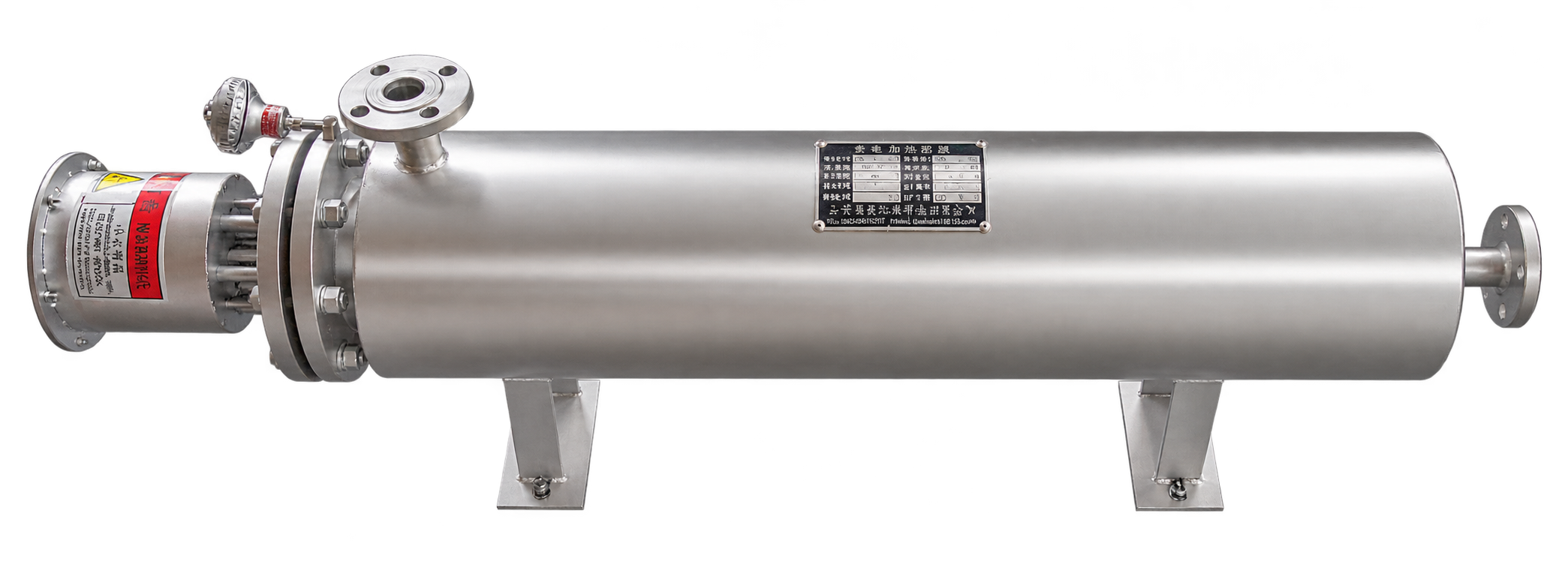
Industrial Water Heater — Process Flow
An inline electric heater transfers heat to flowing water in its vessel; specified sensing, pressure and control systems regulate outlet temperature. Core logic: establish water flow before heating; inhibit heating on no/low flow.
Industrial Water Heater — Applications
Assess continuous or intermittent hot-water duties against flow, temperature rise, water quality, pressure and environment.
Industrial Water Heater — Heating Media
The main medium is water, including mains, softened, purified, deionised and verified compatible circulating water.
- Water type: mains, softened, purified, deionised or circulating water; contaminated wastewater requires specific assessment.
- Temperature: inlet, target outlet and permissible fluctuation.
- Water chemistry: hardness, pH, chloride, sediment and solids.
- Operation: rated/minimum protective flow and design pressure.
- Risks: corrosion, scaling, local boiling and freezing.
Assess inlet softening and a descaling plan for hard water. Verify minimum-flow interlocks and prohibit heating without flow.
Industrial Water Heater — Technical Specifications
First provide rated/minimum flow, inlet/outlet temperatures, temperature rise and water chemistry; assess heat duty and protection together with pressure.
Industrial Water Heater — Material Selection
Select materials for temperature, chemistry, hardness, pressure, continuous duty and budget.
- Vessel: assess Q235B or other carbon steels for compatible non-hygienic water duties; verify pressure suitability against standards, temperature, thickness, welding and inspection.
- 304/316L: select against chemistry, chloride concentration, temperature and corrosion; 316L is not a universal corrosion-resistance guarantee.
- Elements: select 304, 321, Incoloy800 or other sheaths for temperature, surface loading and chemistry; Incoloy800 is not automatically suitable for all highly corrosive water.
- Match flanges, nozzles, baffles, gaskets and thermowells to temperature/pressure and compatibility.
Industrial Water Heater — Customization Options
Assess modular solutions against process, space and safety requirements.
- Mechanical: vessel dimensions, nozzle directions, flange standards and supports.
- Integration: inlet filter, drain, relief devices and insulation.
- Controls: multiple sensors, PLC panel, touchscreen, 4–20mA or RS485 interfaces.
- Protection: flow, pressure, sheath temperature and audible/visual alarms.
- Explosion protection: assess cabinet, sensors, wiring and surface temperatures together against hazardous-area and certification requirements.
- Insulation: suitable ceramic-fibre or other materials with galvanised/stainless cladding.
- Surface treatment: blasting/coating carbon steel and finishing stainless steel.
- Additional options: maintenance access, sampling points and bypass components.
Customization follows mutually confirmed technical documents.
Industrial Water Heater — Frequently Asked Questions
Grouped by selection, installation/commissioning and maintenance.
Selection
What are the key selection inputs?
Provide flow, inlet/outlet temperatures, chemistry, pressure, connections, space, supply and hazardous-area conditions. Flow and temperature rise are core heat-duty inputs and influence construction and protection.
What is the maximum water temperature?
It depends on materials, pressure-dependent saturation temperature, boiling margin, surface loading and design. 80–120°C is only a reference for some designs; atmospheric systems cannot simply be designed for liquid water at 120°C.
What are the risks of insufficient flow?
Insufficient heat removal can cause excessive sheath temperature, local boiling, scaling and element damage; provide a suitable minimum-flow interlock.
Installation and Commissioning
What are the installation requirements?
Follow drawings for flow paths, supports and required straight lengths; seal flanges correctly. Flush, fill and vent before commissioning; verify pumps/interlocks with heating isolated and required pump flow established. No-load testing does not mean running a pump or heater dry.
Is a flow switch required?
Provide an appropriate flow-proving and heating-interlock arrangement, using a flow switch or another validated method. Confirm configuration through the agreement; do not heat without flow.
Maintenance
What routine maintenance is needed?
Inspect scaling, filters, temperature/pressure/flow instruments, insulation, welds and seals under the plan; increase appropriate descaling for hard water. Shut down, isolate, cool and depressurise safely before maintenance; follow specified intervals.
How should slow outlet heating be investigated?
Qualified personnel should safely check actual flow, filters, scale, element power, bypasses and PID settings, with technical support as needed. Do not bypass protection.
This supports preliminary assessment, not a site-specific design. Follow delivered instructions and applicable electrical/pressure-equipment safety requirements.
Related heating directions
All products ↗START WITH YOUR APPLICATION
A clear requirement.
A better starting point.
You do not need every technical detail to begin. Describe the duty and share what you know.